

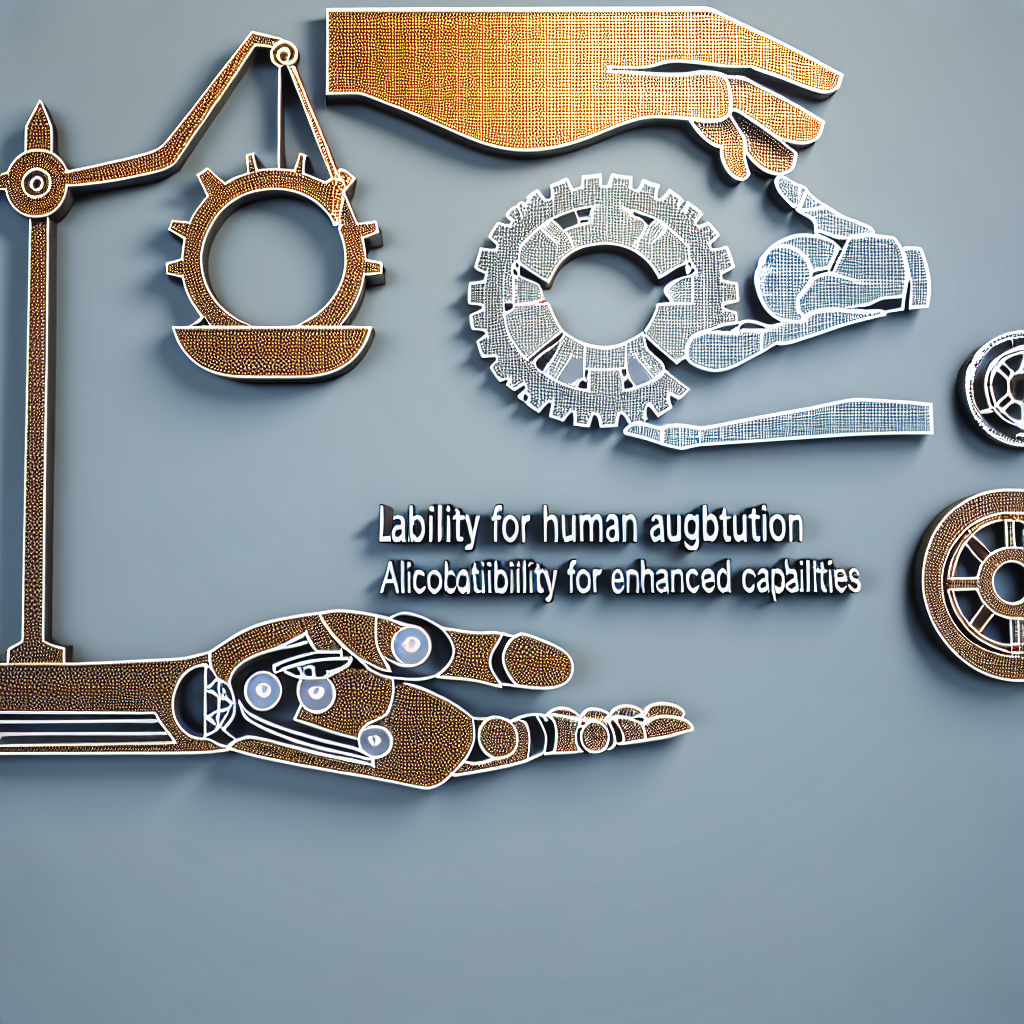
Liability for Human Augmentation: Allocating Responsibility for Enhanced Capabilities
Introduction
In an era where technology intersects with human biology, the burgeoning field of human augmentation raises significant legal questions—particularly regarding liability and accountability. As enhancements, ranging from neurological implants to advanced prosthetics, become commonplace, understanding who bears responsibility when these technologies fail or cause harm is imperative. This article explores the intricacies of liability for human augmentation, emphasizing the need for clear frameworks that address these emerging challenges.
Understanding Human Augmentation
Human augmentation refers to the process of enhancing human capabilities through technology. This could be achieved through:
- Biological enhancements: Genetic modifications, hormone treatments, and cellular therapies.
- Cyborg technology: Integration of electronic devices with human physiology such as cochlear implants and bionic limbs.
- Smart drugs and cognitive enhancers: Substances aimed at improving mental performance.
As these technologies advance, so does their potential for application in various fields, including medicine, defense, and competitive sports. However, with great advancement comes significant risk, including ethical concerns and liability issues.
Legal Landscape for Liability of Human Augmentation
Frameworks of Responsibility
The legal complexities surrounding human augmentation primarily stem from the need to allocate responsibility. Key frameworks include:
- Product Liability: Manufacturers may be held accountable if their products are defective or fail to meet safety standards.
- Professional Liability: Healthcare providers and practitioners may face legal repercussions for improper implementation or management of augmentation technologies.
- Regulatory Liability: Government bodies may share responsibility if regulations on human augmentation fail to protect individuals from harm.
It is crucial to delineate these responsibilities to foster a safe environment for innovation while protecting individuals’ rights.
Product Liability Challenges
Within product liability, the concept of “strict liability” often holds manufacturers responsible for harm caused, regardless of fault. Yet, when it comes to human augmentation, several factors complicate this principle:
- Complexity of Products: Many augmentation devices are sophisticated, often making it difficult to establish fault or defect.
- Human Element: The variability of individual responses to augmentation can obscure the link between product failure and injury.
- Technological Advancements: Rapid innovations can outpace current legal frameworks, leaving gaps in accountability.
Professional Liability Considerations
Healthcare professionals are crucial in administering human augmentation technologies. They bear responsibility in ensuring informed consent, appropriate application, and management of potential complications. Key aspects include:
- Informed Consent: Practitioners must fully disclose risks associated with procedures, ensuring patients understand potential outcomes.
- Standard of Care: Professionals must adhere to established protocols and guidelines when implementing augmentation procedures.
- Negligence Claims: Failure to uphold these obligations can result in claims of malpractice if patients experience adverse effects.
The Role of Regulatory Agencies
Regulatory bodies play an essential role in shaping the landscape for human augmentation. They are responsible for creating standards and guidelines to ensure public safety. Here are some pivotal considerations:
- Pre-market Approval: Agencies like the FDA require thorough testing of devices before they can be marketed, establishing initial safety standards.
- Ongoing Monitoring: Post-market surveillance is vital to track long-term effects and complications associated with emerging technologies.
- Ethics in Regulation: Regulatory frameworks must evolve to reflect ethical considerations as augmentation technologies advance.
Global Perspectives on Liability for Human Augmentation
U.S. Regulations
The United States grapples with unique challenges in legislating human augmentation, where rapid technological advancement often outstrips legislative processes. Implementation of tort reform, the emergence of new regulatory guidelines, and collaboration with bioethicists are vital strategies in evolving this legal landscape.
U.K. Regulations
The U.K. also presents a complex landscape, driven by the NHS’s role in managing healthcare and the push towards innovation. The National Institute for Health and Care Excellence (NICE) provides recommendations, often influencing the regulatory measures surrounding augmented medical devices.
UAE Perspectives
In the UAE, the adoption of human augmentation technologies is met with enthusiasm and caution. The legal framework is evolving, and there is a concerted effort to balance innovation with ethical considerations, ensuring public safety while encouraging technological advancement.
Ethical Considerations in Human Augmentation
Beyond legal frameworks, ethical dilemmas pose significant challenges in human augmentation:
- Equity: Ensuring equitable access to augmentation technologies is essential to prevent a divide between those who can afford enhancements and those who cannot.
- Autonomy: Augmentations must respect individual choices, particularly concerning privacy and bodily autonomy.
- Consequences of Enhancement: The implications of enhanced capabilities on personal identity, teamwork, and social dynamics must be evaluated.
Future Directions and Recommendations
As the field of human augmentation continues to expand, there are several recommendations for shaping liability frameworks:
- Develop Comprehensive Regulations: Governments and regulatory bodies should collaborate with stakeholders to create robust laws addressing the challenges of human augmentation.
- Encourage Cross-Jurisdictional Cooperation: As technologies span international borders, a unified approach to regulation is crucial.
- Support Research Initiatives: Ongoing research into the legal implications, risks, and benefits of human augmentation will inform future policies.
The Consultant Global’s Role in Navigating Legal Complexities
The Consultant Global is uniquely positioned to assist clients navigating the complex legal landscape surrounding human augmentation. With a rich history of consultancy services, we leverage our extensive experience in international, governmental, and private sectors to provide informed guidance.
Our team of specialists appreciates the nuances of working in diverse and multicultural environments, particularly across the GCC and UAE. By utilizing our strong language skills and cultural understanding, we are dedicated to delivering personalized consultancy tailored to meet our client’s unique needs.
We prioritize embedding our values into our consultancy services, ensuring our clients receive comprehensive support that is both ethical and compliant with evolving regulations. Our commitment to excellence makes us your trusted advisors as you explore the potential of human augmentation to elevate your business and operational capabilities.
Conclusion
Liability for human augmentation remains an evolving field that necessitates collaboration between legal experts, technologists, and ethicists. As advancements continue to blur the lines of traditional legal frameworks, defining responsibility in this exciting frontier is crucial. The Consultant Global stands ready to guide organizations through these complexities, ensuring adherence to legal standards while capitalizing on innovative opportunities. Together, we can navigate the future of human augmentation responsibly and ethically.


Leave a Reply