

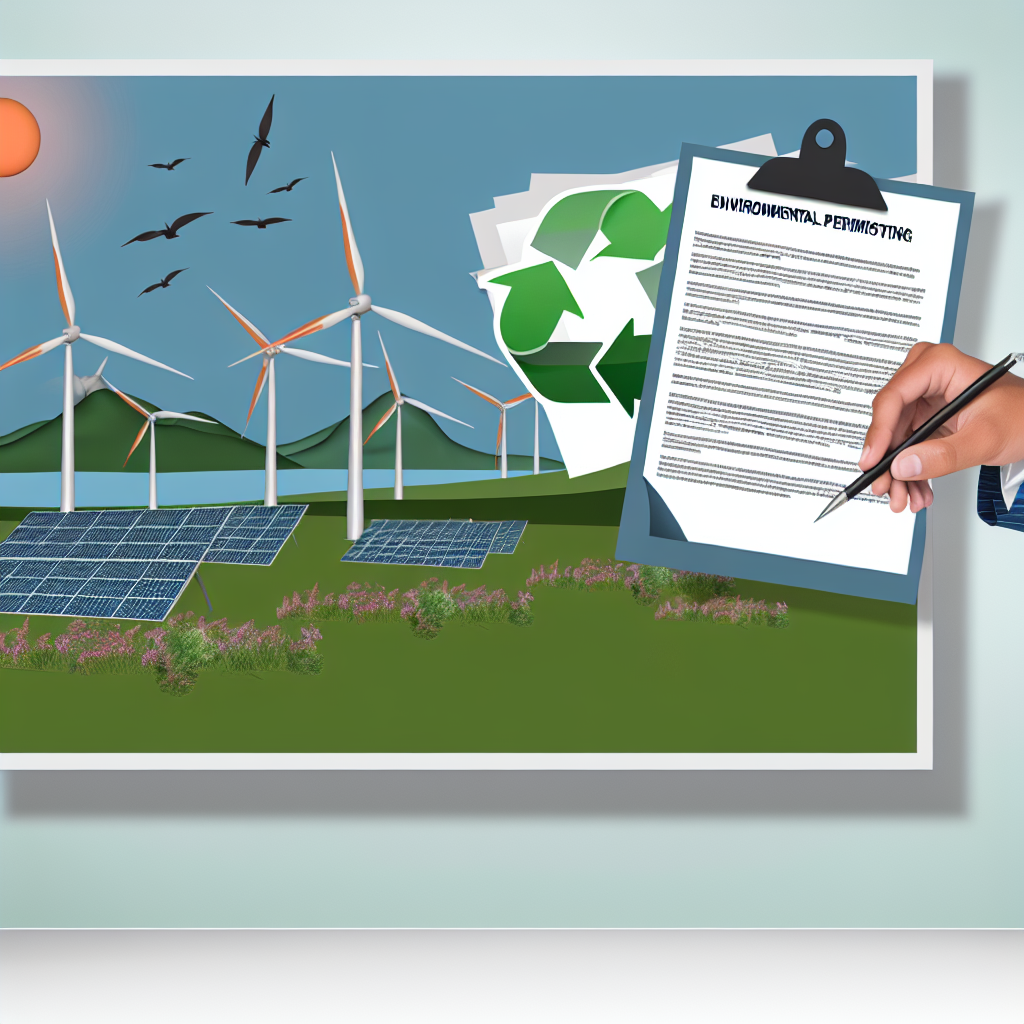
Environmental Permitting for Renewable Energy Projects
Introduction
As the world transitions towards sustainable energy solutions, the environmental permitting process for renewable energy projects has become increasingly vital. Understanding the legal and regulatory framework is crucial for ensuring compliance, minimizing risks, and expediting project timelines. This article aims to provide an overview of environmental permitting for renewable energy projects, exploring best practices and insights that can help stakeholders navigate the complexities of U.S., U.K., and UAE regulations. At The Consultant Global, we pride ourselves on our extensive experience in international consultancy and our ability to work across diverse cultures, making us uniquely positioned to assist in these efforts.
Understanding Environmental Permitting
Environmental permitting refers to the legal process of obtaining approvals from government authorities before commencing any activity that may affect the environment. In the context of renewable energy projects, this involves various steps aimed at ensuring that projects align with environmental regulations and standards.
Key Objectives of Environmental Permitting
- Environmental Protection: Safeguarding ecosystems, air quality, and natural resources.
- Regulatory Compliance: Ensuring adherence to local, national, and international laws.
- Stakeholder Engagement: Involving local communities and addressing their concerns.
- Project Feasibility: Assessing the viability of projects through environmental impact assessments (EIA).
The Process of Obtaining Environmental Permits
The environmental permitting process can be multifaceted and varies depending on the specific type of renewable energy project (e.g., wind, solar, hydroelectric). Below is a general outline of the key steps involved:
1. Pre-application Consultation
Before submitting a permit application, it is advisable to consult with relevant authorities to gain insights into the permitting requirements specific to the project. This stage can also help identify potential hurdles early on.
2. Environmental Impact Assessment (EIA)
Conducting an EIA is a crucial step in the permitting process. This assessment evaluates the potential environmental effects of a proposed project, including impacts on local wildlife, water resources, and air quality. The findings will inform the permit application and any necessary mitigation strategies.
3. Application Submission
Once the EIA is completed, the permit application can be submitted to the appropriate regulatory body. This application should include detailed information about the project, findings from the EIA, and proposed mitigation measures.
4. Public Review and Consultation
Many jurisdictions require a public review period, allowing stakeholders and the general public to comment on the proposed project. Engaging with the community is essential for building trust and addressing concerns.
5. Permit Issuance
If the application meets all regulatory requirements and addresses any public concerns, the permit may be granted. It’s important to note that permits can come with specific conditions and compliance obligations that must be fulfilled.
Challenges in the Permitting Process
While the permitting process is designed to protect the environment, it can also present challenges for developers. Common obstacles include:
1. Regulatory Complexity
Navigating the various laws and regulations governing environmental permitting can be overwhelming, especially for projects that span multiple jurisdictions. Compliance with both federal and state laws is often required in the U.S.
2. Time-Consuming Review Processes
Permitting processes can be lengthy, deterring investors and delaying project timelines. Developers must be prepared for potential delays and include them in project planning.
3. Public Opposition
Community opposition can significantly impact the permitting process. Engaging stakeholders early and transparently can help mitigate resistance and foster support for sustainable energy initiatives.
Best Practices for Successful Environmental Permitting
To navigate the complexities of environmental permitting successfully, renewable energy project developers should adopt the following best practices:
1. Early Engagement with Regulatory Authorities
Initiating discussions with regulatory bodies at the project’s onset can clarify expectations and streamline the permitting process, reducing the likelihood of setbacks.
2. Comprehensive Environmental Assessments
Investment in thorough environmental assessments ensures that potential impacts are well-documented and addressed, leading to more informed decisions by authorities.
3. Transparent Communication with Stakeholders
Proactive communication with local communities and stakeholders fosters trust and can lead to collaborative solutions that enhance project acceptance.
4. Adaptability and Flexibility
The permitting landscape is continually evolving, and developers must be adaptable to navigate changes in regulations and public sentiment.
Global Perspectives on Environmental Permitting
While the U.S. and U.K. have well-established regulatory frameworks for environmental permitting, emerging markets such as the UAE are developing their approaches. Key considerations include:
1. U.S. Framework
The U.S. regulatory framework emphasizes a rigorous EIA process, often involving federal agencies such as the Environmental Protection Agency (EPA). Developers must also consider state-level requirements, which can vary significantly.
2. U.K. Approach
The U.K. has implemented streamlined processes for renewable energy projects, including simplified EIA requirements for certain smaller projects. Recent policies focus on enhancing the speed of approval while ensuring environmental standards are maintained.
3. UAE Practices
In the UAE, the focus on sustainability and renewable energy is gaining momentum, with the government implementing various initiatives to facilitate faster permitting for such projects. Developers can benefit from understanding local regulations and leveraging government support.
Why Choose The Consultant Global?
At The Consultant Global, we recognize the importance of effective environmental permitting in the success of renewable energy projects. Our extensive experience across international, government, and private sectors enables us to provide tailored consultancy services that prioritize regulatory compliance and stakeholder engagement.
Our team is fluent in multiple languages, including English, Turkish, Azerbaijani, Russian, and French, allowing us to bridge cultural gaps and foster effective communication with diverse stakeholders. We are committed to becoming a trusted advisor for businesses looking to navigate the complexities of environmental permitting, particularly in the GCC and UAE, where we are uniquely positioned to help drive sustainable development.
As we aim to continue our global growth, The Consultant Global stands ready to support your renewable energy ventures with a focus on delivering value without wasting time or resources. Let us help you unlock the potential of your projects while ensuring compliance with environmental regulations. Together, we can make sustainable energy a reality!


Leave a Reply