

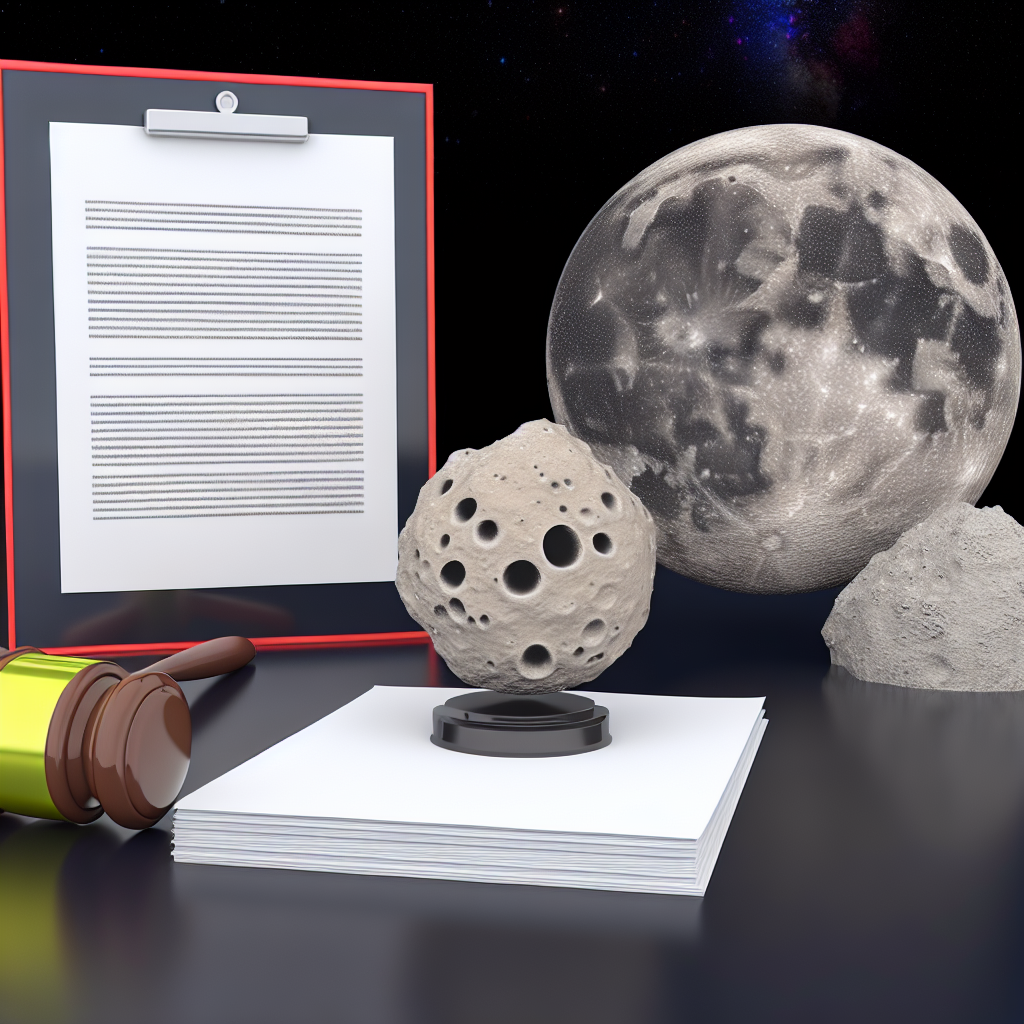
Property Rights in Space: Legal Aspects of Lunar and Asteroid Resources
Understanding Property Rights in Space
The realm of outer space has fascinated humanity for decades, raising profound questions about ownership and resources beyond our planet. As we advance technologically, the prospect of mining lunar and asteroid resources takes center stage, prompting discussions on the legal aspects of property rights in space. This article delves into the legal frameworks that govern such activities, the rights of nations and corporations, and the evolving scenario of space resource utilization.
The Legal Framework Governing Space Resource Utilization
The legal aspects surrounding property rights in space are influenced primarily by international space law. The most significant treaties include the Outer Space Treaty of 1967, the Moon Agreement of 1984, and various national legislations that have emerged worldwide.
The Outer Space Treaty
The Outer Space Treaty establishes the foundational principles for the usage of outer space, asserting that:
- Space shall be free for exploration and use by all nations.
- Outer space, including the Moon and other celestial bodies, is not subject to national appropriation.
- Countries are responsible for national space activities, irrespective of whether conducted by governmental or non-governmental entities.
This treaty suggests that no one can claim sovereignty over celestial bodies, which complicates property rights but lays the groundwork for potential future regulations on resource extraction.
The Moon Agreement
The Moon Agreement attempts to bolster the principles of the Outer Space Treaty by specifying that the Moon and its resources are the common heritage of mankind. However, it has not been widely ratified and lacks binding authority, leaving a significant gap in legal enforcement around lunar resources.
U.S. Legislation on Space Resource Utilization
In contrast to the Moon Agreement, U.S. legislation has moved forward with a more permissive approach regarding space resources. The Commercial Space Launch Competitiveness Act (CSLCA) of 2015 allows U.S. citizens to engage in the extraction and utilization of space resources, effectively granting them rights to any materials obtained from celestial bodies.
Commercial Implications of U.S. Law
This legislation bears significant implications for private enterprises, fostering an environment conducive to investment and innovation in asteroid mining and lunar extraction projects. Companies envision capabilities to harvest valuable minerals, water, and other resources in the pursuit of profit, which marks a shift in how space is perceived—not just as a realm of exploration, but also as an economic landscape.
International Perspectives on Space Resources
While U.S. legislation takes a proactive stance, the response in other countries varies widely. Nations are navigating the complexities of international treaties alongside domestic regulations, leading to a patchwork of legal precedents that may affect the rights of companies intending to mine celestial bodies.
Comparative Legal Analysis
In the United Kingdom and the UAE, legal frameworks related to space activities are evolving but remain cautious. UK law advocates a responsible use of space, while UAE’s recent strides in space technology and exploration present opportunities for future regulations on property rights in space.
The Role of Compliance in Space Resource Utilization
In the burgeoning field of space resource utilization, compliance with legal obligations is paramount. As corporations venture into this issue, they must be cognizant of both domestic and international laws governing their operations.
Key Compliance Considerations
- Regulatory Frameworks: Corporations must develop an understanding of the evolving regulatory landscape as international agreements and national laws continue to adapt.
- Environmental Considerations: Compliance with environmental standards applicable to space exploration must be observed to prevent detrimental impacts on celestial environments.
- Ethical Guidelines: Organizations are encouraged to establish internal ethical standards for conducting their business in respect to the universal heritage of celestial bodies.
The Unique Position of The Consultant Global
At The Consultant Global, we leverage our extensive experience in international legal frameworks to support businesses navigating the complexities of space law. Our multilingual team, fluent in English, Turkish, Azerbaijani, Russian, and French, is uniquely positioned to assist clients within the GCC and the UAE, fostering intercultural dialogue and understanding that engenders trust.
Our commitment to providing top-tier consultancy services reflects our mission to become your trusted advisor, ensuring that your business harnesses the potential of space resource utilization efficiently and ethically. The blend of our diverse experience in international, government, and private sectors allows us to tailor solutions that genuinely meet our clients’ needs.
The Future of Property Rights in Space
The question of property rights in space remains complex and continually evolving. As countries consider new legislation and as commercial interest in lunar and asteroid mining grows, clarity in legal frameworks will be crucial. In battling with issues such as resource availability, ownership, and ethical extraction, collaboration between governments, international organizations, and the private sector will be vital.
Potential Developments to Watch For
- The ratification and implementation of future international treaties that establish clearer guidelines for resource extraction.
- Advancements in technology that may shift the economic feasibility of celestial resource utilization.
- Increased cooperation among nations to develop comprehensive international regulations that ensure equitable use of space resources.
Conclusion
The legal aspects of property rights in space, particularly concerning lunar and asteroid resources, present a fascinating intersection of law, business, and ethics. As a leading consultancy, The Consultant Global is here to guide businesses through these uncharted terrains, ensuring compliance and promoting ethical practices in the expanding frontier of space resource exploitation. Our expertise and dedication to value-driven consultancy positions us as your partner in navigating the complexities of the new space economy.


Leave a Reply