

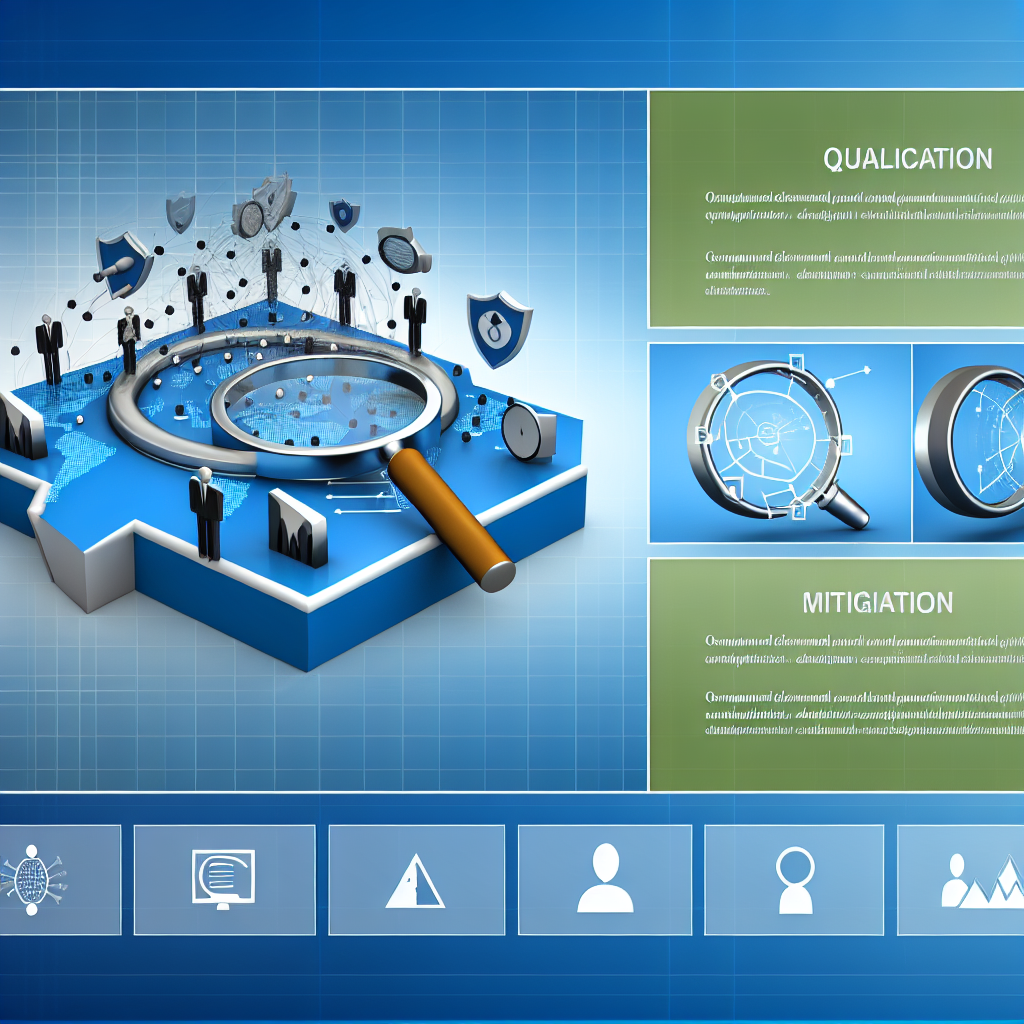
Risk Management Frameworks: Identifying and Mitigating Corporate Risks
Introduction
In today’s volatile business landscape, understanding and managing corporate risks is more crucial than ever. The development of effective Risk Management Frameworks enables organizations to identify, evaluate, and mitigate various risks that could potentially hinder their growth and sustainability. This article delves into the importance of Corporate Risk Management Frameworks, exploring how businesses can leverage these frameworks to safeguard their interests while ensuring compliance with legal and regulatory requirements. At The Consultant Global, we pride ourselves on our extensive experience and nuanced understanding of risk management, making us your trusted advisor in navigating these complex waters.
Understanding Risk Management Frameworks
A Risk Management Framework (RMF) refers to a structured approach that organizations use to identify, assess, and mitigate risks. The framework’s components can vary, but they typically include:
- Risk Identification: Recognizing potential risks that could impact the organization.
- Risk Assessment: Evaluating the severity and likelihood of these risks occurring.
- Risk Mitigation: Developing strategies to minimize the impact or likelihood of the risks.
- Risk Monitoring and Reporting: Continuously tracking risks and reporting on their status.
The Importance of Risk Management
Risk management is critical for several reasons:
- Protecting Assets: By identifying potential risks, organizations can take proactive measures to protect their assets.
- Ensuring Compliance: A robust RMF ensures compliance with legal and regulatory obligations, particularly in industries with stringent oversight.
- Enhancing Decision-Making: Understanding risks allows organizations to make informed decisions, balancing risk and opportunity.
- Building Reputation: Corporations noted for their commitment to risk management often enjoy enhanced reputations among clients, stakeholders, and investors.
Identifying Corporate Risks
Identifying corporate risks is the initial step in any RMF. This process involves recognizing potential internal and external threats. Various tools and techniques can aid in this identification process:
- SWOT Analysis: Evaluating strengths, weaknesses, opportunities, and threats.
- Interviews and Surveys: Gathering insights from stakeholders and employees regarding perceived risks.
Types of Corporate Risks
Organizations face numerous types of risks, including:
- Financial Risks: These include market fluctuations, credit risks, and liquidity risks.
- Operational Risks: Risks associated with internal processes, systems, and people.
- Compliance Risks: These stem from regulations and laws that organizations must follow.
- Reputational Risks: Risks that stem from negative public perceptions.
- Strategic Risks: Risks that can affect the overall direction and profitability of the organization.
Assessing Corporate Risks
Evaluating Likelihood and Impact
Once risks have been identified, the next step is to assess them. This involves evaluating the likelihood of a risk occurring and the impact it would have on the organization. Approaches to evaluation can include:
- Qualitative Assessment: Using expert judgment to evaluate risks based on their significance.
- Quantitative Assessment: Utilizing numerical data and statistical methods for assessing risk.
Developing a Risk Mitigation Strategy
Risk Control Measures
After assessing risks, organizations need to develop risk mitigation strategies. Various strategies can be employed:
- Avoidance: Altering plans to sidestep potential risks.
- Reduction: Implementing measures to reduce the likelihood or impact of risks.
- Transfer: Sharing the burden of risk with third parties (e.g., through insurance).
- Acceptance: Acknowledging the risk without taking action, usually for low-impact situations.
Examples of Mitigation Strategies
Some practical examples of risk mitigation strategies include:
- Implementing compliance training programs for employees.
- Establishing robust financial controls and audits.
- Integrating risk management into the corporate governance framework.
Monitoring and Reporting Risks
The Importance of Continuous Monitoring
Risk management is not a one-time process but requires continuous monitoring and adjustment. Organizations should regularly review their existing risk management strategies to ensure they remain effective. This may involve:
- Conducting periodic risk assessments to identify new risks.
- Tracking the performance of risk control measures and making necessary adjustments.
Effective Reporting Mechanisms
Effective risk reporting ensures that key stakeholders are informed about the risk landscape. Implementing dashboards and regular reporting schedules can help facilitate this communication.
Legal Compliance and Governance
U.S. and U.K. Regulatory Frameworks
Legal compliance is an integral aspect of any Risk Management Framework. Organizations operating in the GCC and beyond must navigate a complex web of regulations. The U.S. and U.K. offer robust frameworks, emphasizing the importance of compliance in risk management:
- U.S. Regulations: Entities must comply with the Sarbanes-Oxley Act for financial reporting, as well as with various sector-specific regulations.
- U.K. Regulations: The UK Corporate Governance Code emphasizes risk management and compliance, setting clear standards for transparency.
Incorporating UAE Practices
Organizations operating in the UAE should also be aware of local regulations and best practices, including compliance with the UAE Federal Law. Understanding cultural nuances and business practices in the region offers significant advantages in managing corporate risks effectively.
The Role of The Consultant Global
With our embedded values and commitment to client success, The Consultant Global stands out in the field of corporate consultancy. Our extensive and unique experience across various industries positions us as a trusted advisor in risk management. We understand the specific needs of our clients and provide tailored solutions that drive tangible outcomes.
Cultural Competence and Language Proficiency
In today’s diverse business environment, cultural competence is crucial for effective risk management. The Consultant Global possesses unparalleled expertise in working within multi-cultural contexts, bringing together insights from different perspectives. Our language proficiency in English, Turkish, Azerbaijani, Russian, and French further enhances our ability to communicate and collaborate effectively across cultures.
Conclusion
In conclusion, establishing a robust Risk Management Framework is vital for identifying and mitigating corporate risks. By understanding the principles and practices outlined in this article, organizations can prioritize risk management to safeguard their assets and ensure compliance. The Consultant Global is uniquely positioned to assist businesses in developing and implementing effective risk management strategies, ensuring that you can focus on what you do best—growing your business.


Leave a Reply